The Older Adult Population in AGACNP Acute Care
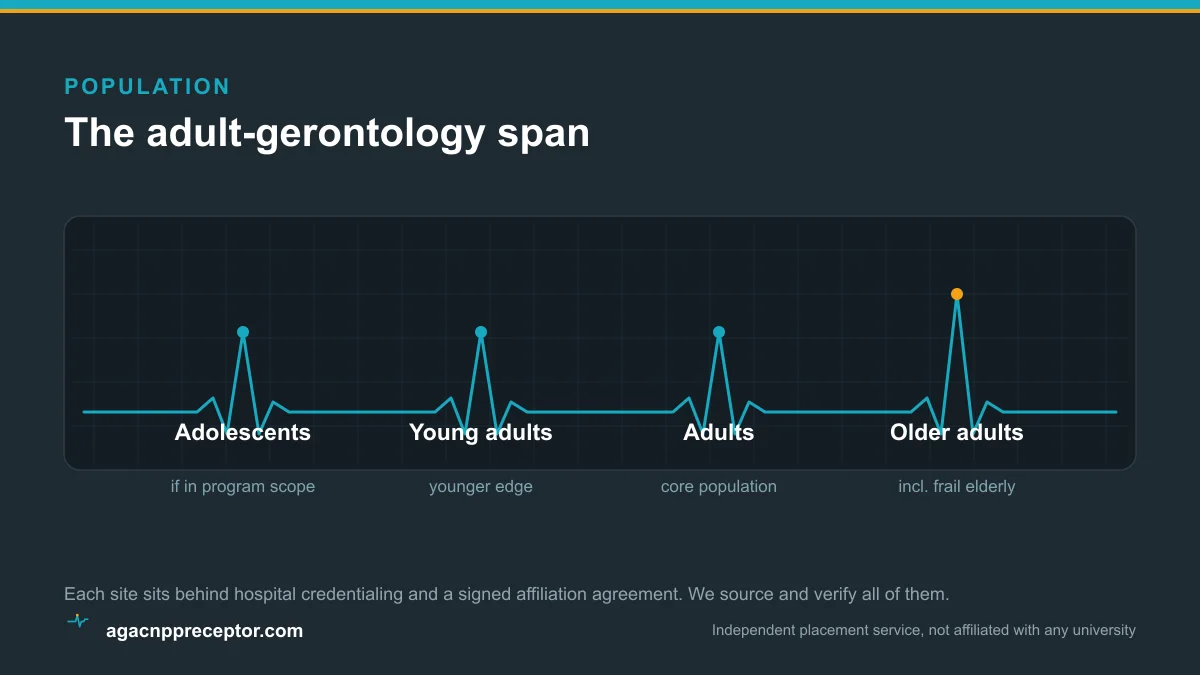
The gerontology half of Adult-Gerontology Acute Care is not an afterthought. Older adults make up a large and growing share of acute inpatient admissions, and managing the acutely ill older adult, with its distinct physiology, medication considerations, and goals-of-care complexity, is a core AGACNP competency. This page explains the older-adult population within the AGACNP scope, what makes geriatric acute care distinct, and how we place your rotations so this population is well covered. We are an independent placement service that works separately from any university.
Tell us your school and city. It is free to ask, with no obligation.
Why are older adults central to AGACNP practice?
The gerontology in AGACNP is deliberate. Older adults are disproportionately represented in ICUs, step-down units, emergency departments, and inpatient services, and the certification exists in part because the acutely ill older adult needs a provider trained specifically in their care. As the population ages, the share of acute inpatients who are older adults continues to rise, which is why programs emphasize this population.
Acute care for older adults is not simply adult care in an older body. Altered physiology changes how illness presents and how patients respond to treatment; polypharmacy complicates every new intervention; atypical presentations of common conditions are frequent; and delirium, falls, functional decline, and frailty layer onto the acute problem. The AGACNP is trained to manage all of that alongside the primary acute illness.
What makes geriatric acute care distinct?
Several features set older-adult acute care apart, and your rotations are where you learn to navigate them:
- Atypical presentation. Serious illness in older adults can present quietly, as confusion or a fall rather than classic symptoms, so recognition is a skill in itself.
- Polypharmacy and altered pharmacology. Medication management is more complex and higher-risk, with narrower margins for error.
- Delirium and cognitive change. Acute confusion is common and consequential, and distinguishing it from baseline requires care.
- Goals of care. Older-adult acute care frequently involves serious conversations about the intensity of treatment, code status, and palliative approaches.
- Function and frailty. The acute episode intersects with baseline function and frailty in ways that shape prognosis and disposition.
The most vulnerable end of this population, the frail elderly, has its own considerations, covered on our frail elderly page.
How we place your older-adult acute-care rotations
We secure acute-care rotations that give you real supervised experience with the older-adult population, across the settings where they are managed. You tell us your school, your city, and the rotations and hours you still need, and we source qualified preceptors and approved inpatient sites across the acute trace.
- Full-trace coverage, so your rotations span the acute settings where older adults are concentrated.
- Verified preceptors, checked against your school's eligibility rules before you commit.
- Local first, because inpatient credentialing and affiliation agreements are geographically bound.
- Credentialing-ready, with the paperwork prepared so you can start on schedule.
Final approval of any site or preceptor rests with the university and the hospital, and we do not speak for either. We do not guarantee hours, grades, or outcomes, and nothing here is a tuition refund. See how it works or start on the find a preceptor page.
Good to know
Why are older adults central to the AGACNP role?
Because older adults are disproportionately represented in ICUs, step-down units, emergency departments, and inpatient services, and the acutely ill older adult needs a provider trained specifically in their care. The gerontology half of adult-gerontology acute care is deliberate, and its importance grows as the population ages.
How is acute care for older adults different?
It is not simply adult care in an older body. Altered physiology changes how illness presents and how patients respond; polypharmacy raises risk; atypical presentations are common; and delirium, falls, functional decline, and frailty layer onto the acute problem. Goals-of-care conversations are also frequent. The AGACNP manages all of this alongside the primary acute illness.
Where do AGACNP students manage older adults?
Across the acute trace, since older adults are concentrated in ICUs, step-down units, emergency departments, and inpatient specialty and hospitalist services. The most vulnerable end of the population, the frail elderly, carries its own considerations, which we cover on a dedicated page. We help ensure your rotations cover this population well.
Are you affiliated with a university?
No. We are an independent placement service that works separately from any university or certification body. We source and verify your acute-care preceptors and sites; final approval always rests with the university and the hospital.
Related
Secure the rotation no one else will hand you
Tell us your school, your city, and the acute rotations you still need. We will come back with a plan for the full AGACNP trace and a realistic path to placed.